

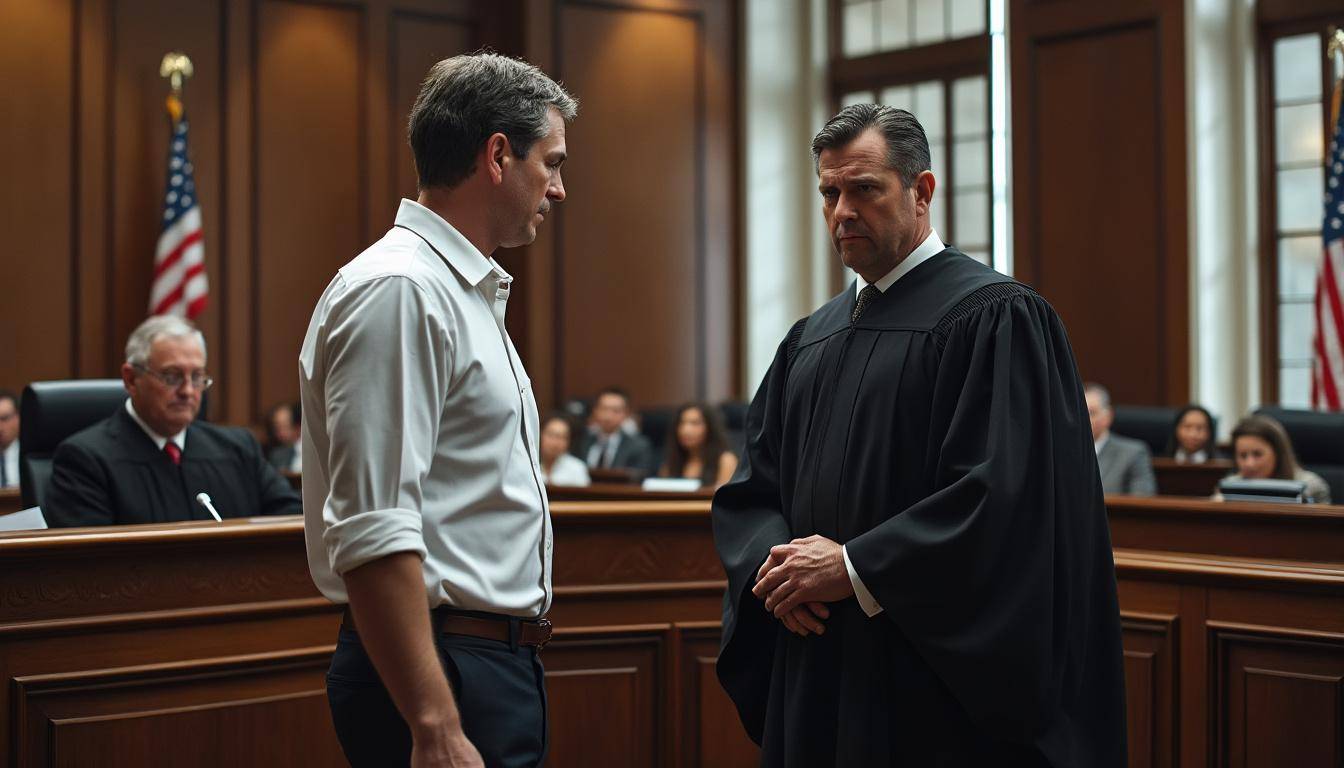
Houston Judge Summons Critic to Court Following Viral Video Incident has turned a courthouse dispute into a wider debate about judicial power, public criticism, and how far a Judge may go when a Critic speaks up.
In brief
Why Houston Judge Summons Critic to Court Following Viral Video Incident hit a nerve
The hallway outside the 215th District Court filled early. Lawyers arrived before 8 a.m., reporters waited near the door, and everyone seemed to be watching for one thing. Would a Houston Judge follow through after he Summons a Critic to Court over a Viral Video Incident?
Houston Judge Summons Critic to Court Following Viral Video Incident spread because the facts were simple and unsettling. A video circulating online appeared to show Judge Nathan Milliron speaking sharply to an IT employee during a courtroom tech problem. People in Houston legal circles did not need much context to react. Courtrooms run on authority, but they also run on restraint.
Then came the twist. Houston attorney James Stafford, who does not practice before Milliron, emailed the Judge to question his conduct and urge an apology. Milliron answered by accusing Stafford of an improper ex parte contact and told him to appear in Court. That response pushed the story from courthouse gossip into a broader Legal and public accountability fight.
Houston Judge Summons Critic to Court Following Viral Video Incident also drew attention because the term ex parte carries weight. Lawyers know ex parte rules exist to prevent one-sided communications about pending cases. Yet legal observers argued Stafford’s email looked more like criticism of public behavior than an attempt to influence a case. That distinction matters. In any justice system, judges hold unusual authority, and public confidence drops fast when personal criticism appears to trigger courtroom power.
By Thursday morning, Stafford stayed away, saying the demand was not a lawful judicial order. Roughly a dozen lawyers from the Harris County Criminal Lawyers Association came anyway. They stood by in support, watched proceedings, and waited for something to happen. Nothing did. A bailiff never called Stafford’s name, and after about 90 minutes, supporters concluded the Judge was taking no further step. Sometimes what does not happen tells the story.
What the viral courtroom clip changed
Houston Judge Summons Critic to Court Following Viral Video Incident became bigger than one email because the original clip touched a nerve many workers know well. A public employee came in to solve a technical problem. Instead of quiet gratitude, the moment appeared to turn into a public dressing-down. In offices, hospitals, and court buildings, readers know that scene.
The Judge later kept a low profile. Media access inside the courtroom was restricted, and a livestream previously used for proceedings was turned off. Reports also noted that his Facebook account disappeared. Those moves did not calm the story. They sharpened the sense that a Viral dispute had exposed a deeper problem about transparency.
For people who deal with the courts after a car wreck, work injury, or negligence claim, demeanor matters more than many expect. A courtroom is not only about statutes and filings. It is also about whether people trust the process. When a Judge appears impulsive, injured parties, defendants, witnesses, and staff all feel the effect. That is the larger lesson beneath the clip.
Questions about judicial conduct do not stay confined to criminal law. They spill into civil litigation, especially where emotions run high and money, medical care, and family stability are on the line. Readers following recent personal injury rulings or cases involving how evidence shapes injury claims already know one truth. The tone of the courtroom shapes faith in the outcome.
Houston Judge Summons Critic to Court Following Viral Video Incident raises hard legal questions
Houston Judge Summons Critic to Court Following Viral Video Incident now sits at the intersection of ethics, free expression, and judicial reach. The central Legal issue is narrow but serious. When a lawyer sends a judge critical feedback unrelated to an active case, does that message become prohibited contact, or is it protected speech about public conduct?
Many attorneys saw Stafford’s email as political or civic speech, not an attempt to sway a ruling. That view gained force because Stafford had never practiced in Milliron’s court. No client matter linked them. No pending dispute seemed tied to the email. Those details matter because ex parte rules exist to guard case fairness, not to insulate public officials from criticism.
Houston Judge Summons Critic to Court Following Viral Video Incident also opens a second question. What happens when a Judge uses courtroom authority in a way lawyers view as personal rather than judicial? Supporters who appeared that morning made a visible point without disrupting proceedings. They signaled that the bar is watching. In any courthouse, peer scrutiny carries weight.
The scene inside the courtroom added another layer. Milliron reportedly handled hearings in a calm manner, including approving a settlement tied to a car crash injury involving a young boy. One defense lawyer later described the Judge’s behavior as pleasant. That comment landed with force because the contrast was obvious. Public pressure had changed the atmosphere, at least for the day.
This is where the story connects with injury law in a practical way. People hurt in collisions or at work often enter court under intense strain. They face medical bills, lost wages, and disruption at home. They need a process that looks fair, sounds fair, and stays within legal bounds. If you are dealing with negligence, product defects, or disputed damages, the lesson is plain. Watch procedure as closely as outcome.
Readers who want context on negligence and liability disputes often look at cases like claims involving lawyer negligence in injury matters or broader mass harm litigation such as product liability and mass tort cases. Different facts, same principle. Process matters because people judge Justice by how power is used.
What readers should do when court power feels intimidating
If a courthouse dispute lands close to home, panic helps no one. People caught in legal conflict after an accident often feel pressure to respond fast, especially when authority figures speak in absolute terms. Start with the record. Save emails, orders, hearing notices, and public filings. Dates and wording matter.
Then get advice from a lawyer who handles the area involved. If the issue touches bodily injury, emotional distress, or property damage caused by negligence, ask direct questions about your rights, deadlines, and what a judge or insurer may lawfully require. In injury litigation, small procedural mistakes hurt real cases. Clear guidance early often protects your position later.
Use this checklist if you face a tense court-related dispute:
- Keep every document, including emails, notices, and screenshots.
- Ask whether the order is formal, signed, filed, and tied to a real case.
- Speak with counsel quickly, especially after a car crash or workplace injury.
- Do not argue facts casually online, since public posts may resurface in court.
- Track the personal impact, including missed work, treatment costs, and stress symptoms.
That last point gets overlooked. Courts do not only handle legal theory. They handle fallout. A serious wreck or jobsite injury often leaves families juggling therapy appointments, transportation problems, childcare gaps, and unpaid time off. Legal systems work best when they recognize that lived burden instead of adding to it. That is the practical stake in stories like this one.
What Houston lawyers saw in court, and why the Justice debate is not over
Houston Judge Summons Critic to Court Following Viral Video Incident did not end with handcuffs, sanctions, or a dramatic courtroom showdown. The anti-climax is part of the point. A dozen lawyers showed up. The Critic did not. The Court moved through its docket. Then supporters stepped into the hallway and said the Judge appeared to back away from further action.
That calm finish does not erase the underlying concern. Legal groups still questioned whether an apology is owed to the IT worker, the attorney who spoke up, and the public. As of the reporting around the episode, no complaint had been filed with the State Commission on Judicial Conduct. Even so, the standards are there for a reason. Commissions review allegations tied to demeaning courtroom conduct, shouting, or other behavior that damages trust in the bench.
Houston Judge Summons Critic to Court Following Viral Video Incident will likely stay in circulation because the facts fit a larger national pattern. Viral clips now shape public impressions of judges, police, lawyers, and school officials in real time. One rough exchange no longer stays in one room. By lunch, millions have watched, clipped, and judged for themselves. Public servants know that. Courts now have to live with that reality too.
For readers dealing with injuries and civil claims, there is one more reason this matters. Settlement hearings, evidentiary disputes, and damages rulings often turn on credibility. If you walk into court after months of pain, surgery, or missed paychecks, you need confidence that procedure will hold. Stories like this one remind people to pay attention, ask questions, and seek counsel before pressure turns into harm.
Houston Judge Summons Critic to Court Following Viral Video Incident is no longer only about a Judge, a Critic, a Court, or a Viral Video. It is about how Justice looks when authority meets scrutiny in public. If you have seen conduct in court that crossed a line, or if your injury case has been shaped by procedural pressure, share your view with others. Your account adds to the record.
En bref
The Harris County episode began with a Viral Video and quickly became a test of courtroom limits. A Houston attorney criticized a Judge, the Judge told the Critic to appear in Court, and local lawyers responded with a show of support.
The legal dispute turned on a key issue. Was the email improper contact, or protected criticism of public conduct? That question matters well beyond one courthouse, especially for people navigating injury litigation, negligence claims, and emotionally charged hearings.
The morning ended without visible punishment, but the debate did not end. If you have dealt with a car crash, workplace injury, or another negligence claim, stories like this are a reminder to protect your records, know your rights, and speak with a qualified lawyer early. If this case caught your attention, share it and tell others what courtroom accountability should look like.
Can a judge order a lawyer to appear in court over a critical email?
A judge’s authority depends on the legal basis for the order and whether the matter is tied to a real case. When the message is public criticism rather than an attempt to influence a pending dispute, lawyers often challenge the validity of such a demand.
What is an ex parte communication?
An ex parte communication is a one-sided contact with a judge about a case without the other side present or informed. Rules against it protect fairness, but criticism unrelated to an active matter raises a different legal issue.
Why does this story matter for injury victims?
People in personal injury cases depend on a fair courtroom when seeking payment for medical bills, lost income, and pain. Judicial conduct affects trust, settlement pressure, and the sense that both sides received equal treatment.
What should you do if court action feels improper after an accident case?
Keep documents, save all communications, and speak with an attorney right away. If the dispute involves a car wreck, work injury, or negligence claim, early legal advice helps protect deadlines and your rights.